
Why Your Dog Isn’t Being Naughty: Understanding Common Behaviour Problems

Author

Gerry Pearson (CBST, CSAT)
Certified Separation Anxiety Trainer at Second Chance Animal Rescue

Posted

June 20, 2026

Understanding your dog’s behaviour through their eyes, so you can build trust, reduce stress, and create real progress together.

When we talk about “problem behaviours” in dogs, it is worth pausing for a moment and asking a simple question. Problematic for who?

From a human perspective, behaviours like barking, jumping, chewing, pulling on lead, or not settling can feel frustrating, inconvenient, or even overwhelming. And that is completely valid. These behaviours can impact daily life and the relationship you have with your dog.

The barking annoys us. The chewing damages our belongings. The pulling on lead makes walks difficult. The anxiety disrupts our routine.

But from the dog’s perspective, these behaviours often serve a purpose. They are communication, coping mechanisms, or attempts to meet a need.

Understanding that simple fact can completely change the way we approach behaviour change, and often leads to far better outcomes for both dogs and their owners.

Dogs do not behave randomly. Every behaviour serves a purpose, even if that purpose is not immediately obvious to us. When we slow things down and look a little closer, we often find that what we are labeling as a problem is actually a reasonable response to something in the dog’s environment, how they are feeling, or their past experiences.

A dog that barks at noises may be feeling worried and trying to keep something they find scary at a distance. A dog that jumps up is often looking for attention or social interaction. A dog that chews furniture, shoes, or other household items may be relieving stress, boredom, or trying to meet a natural need to chew. And a dog that struggles to relax or settle may not be naughty at all… they could actually be feeling anxious or unable to fully switch off.

Looking at behaviour as communication rather than the dog being ‘naughty’, can help us to begin understanding what our dogs are really trying to tell us.

When we ask a dog to stop a behaviour we are actually asking them to give up something that is working for them at that moment. 

When we ask a dog to stop doing something we dislike, we’re asking them to give up a strategy that helps them feel safe and/or meet a need. 

Like humans, dogs are wired to repeat behaviours that are effective. If a behaviour achieves an outcome (such as relief, attention, space, or stimulation) it is likely to happen again.

This is where frustration can build… From our perspective we are trying to stop this behaviour, but for the dog they are only using a strategy that makes sense to them.
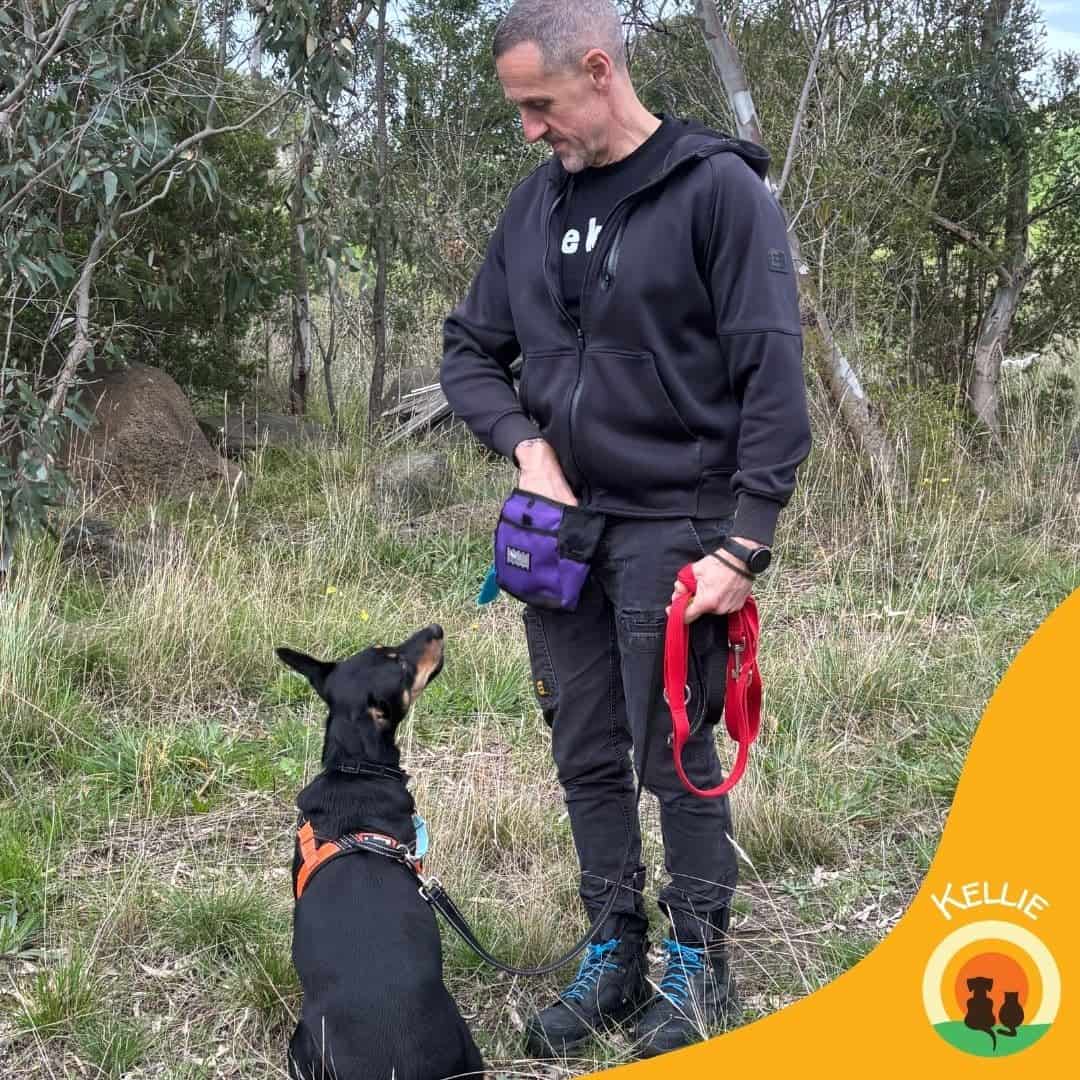
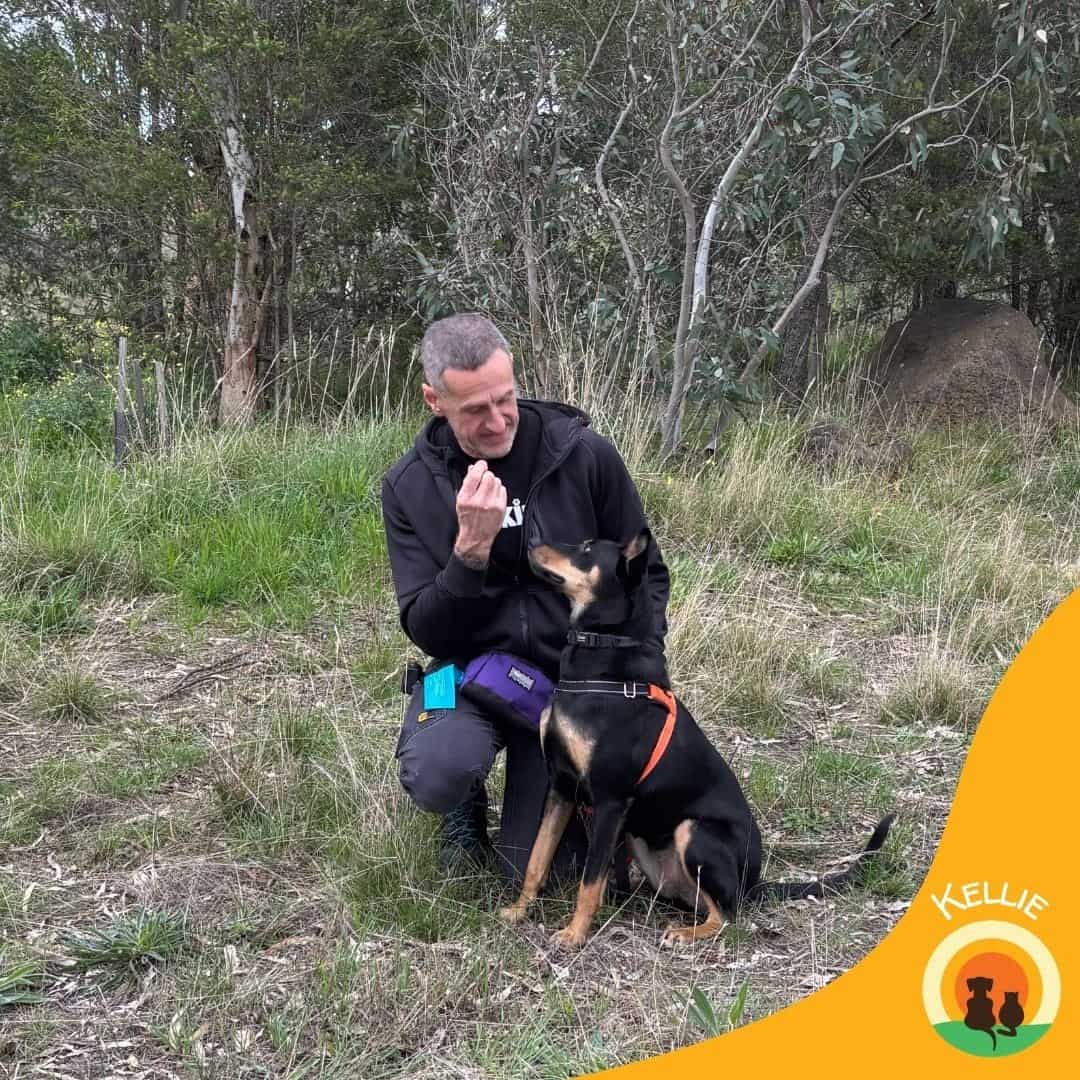
Kellie isn’t being “good” here. She’s feeling safe, supported, and able to engage. New environments used to trigger fear responses like vigilance, pulling, and constant movement as she tried to cope.
By working with Kellie to build safety and support rather than forcing change, she is now able to explore calmly and confidently.

Changing the Way We Look at Behaviour

Once we recognise that behaviour has function, the focus starts to shift.

Instead of asking… “How do I stop this?”, we begin asking “Why is this happening?” and “What is the dog getting out of it?”

That shift is important because it opens up better solutions!

If a behaviour is being driven by stress or uncertainty, then the answer is not just to interrupt or prevent it. We need to look at what is causing that stress and how we can reduce it. If a behaviour is meeting a need, then we need to think about how that need can be met in a more appropriate or manageable way.

For example, if a dog is pulling on lead because they are highly motivated to explore, simply stopping the pulling without addressing that underlying motivation is unlikely to be successful long term. If a dog is barking because they are anxious, ignoring the behaviour does not change how they feel.

Behaviour change becomes much more effective when we work with the underlying drivers rather than against them.

Meeting Needs and Supporting Emotional State

A large part of behaviour work comes back to two key areas. Meeting the dog’s needs and supporting their emotional state.

Dogs need opportunities to move, explore, rest, and engage with their environment. They also need to feel safe. When these needs are not consistently met, or when a dog is regularly placed in situations they are not comfortable in, behaviour is often the first place we see it show up.

This is why management and training go hand in hand.

Management helps prevent the dog from rehearsing behaviours that are not working for us. Training helps build new skills and new responses. But underneath both of these is the emotional experience of the dog.

If a dog feels overwhelmed, anxious, or frustrated, behaviour change will be slower and less stable. If a dog feels safe and comfortable, they are in a much better position to learn something new.

Get past “Fixing” Behaviours

It is very easy to fall into the mindset of trying to ‘fix’ or ‘get rid of’ behaviours as quickly as possible. That makes sense… especially when those behaviours are affecting your daily life.

But long term change does not come from just stopping what we don’t like. It comes from understanding why it is happening, reducing the need for that behaviour, and actively teaching alternative options.

That might mean changing the environment. It might mean adjusting your own expectations. It might mean building new skills slowly over time.

It also means recognising that progress is not always linear. Like with humans, learning takes time, and behaviour can change depending on what else is going on in the dog’s world.

Taking a Practical and Compassionate Approach

When we take the time to understand behaviour in this way, it leads to a more realistic and more compassionate approach.

We are no longer just reacting to what we see… we are looking at the full picture (the environment, the history, the emotional and physical state, and the function of the behaviour itself).

From there, we can make clearer decisions about what to change, what to support, and what to teach.

This does not mean we ignore behaviours that are difficult to live with. It means we address them in a way that actually leads to lasting change.

By focusing on what the dog needs, how they are feeling, and what is driving the behaviour, we move away from just managing symptoms and move directly towards building skills and confidence.

And that is where meaningful progress happens.

Want to learn more? Contact our Shelter Trainer, Gerry, today!

Email: sheltertrainer@secondchanceanimalrescue.com.au

Share

Facebook
LinkedIn
Separation Anxiety Questionnaire

This series of questions is for us at Second Chance Animal Rescue to better understand your pet. Please provide all the detail you can as this helps us determine how best we can help you and your dog, and understand your goals.

Fields marked with the Asterix (*) symbol are mandatory.

Kennel Sponsorship Contact

Paws At Work Registration Form

Thanks for your interest in SCAR’s Paws at Work Program!

Due to the popularity of this program, our calendar is fully booked out for the rest of the year. Applications are temporarily closed until we have new dates locked in, but please check in again soon so we can bring some four-legged joy to your workplace when we can!

If you are interested in taking part, please complete the following registration form, and we will add you to our waitlist to be contacted for the next available round of dates.
Group Organiser's Name *
*50% fee for cancellations within 14 days of your booking. 100% fee for cancellations within 7 days of your booking.

Corporate Volunteering Registration Form

If you are interested in taking part, please complete the following registration form, and we will contact you to discuss availability and make your team’s booking.
Group Organiser's Name *
Availability *
Acknowledgement
*Due to the physical nature of working in the shelter, volunteer roles may involve significant amounts of manual handling, and a reasonable level of fitness is required. Manual handling includes sustaining repetitive movements of lifting/bending, pushing/pulling, twisting/turning and walking for extended periods of time. Some heavy lifting up to 15kg may be required.
Details for Tax Invoice & Payment

Please make sure the following details are correct.
I acknowledge that my organisation will receive an invoice for a financial contribution of a minimum of $800 (inc GST) or more, depending on the number of people who are booked in. I understand payment is within 14 day payment terms for hosting our volunteers.
I acknowledge the cancellation policy*
*50% fee for cancellations within 14 days of your booking. 100% fee for cancellations within 7 days of your booking.
Contact Name For Invoice *

Volunteer Application

Thank you for your interest in volunteering with SCAR! Applications are temporarily closed to allow our team the time to review the large number of applications recently received. We’ll be reopening applications again mid year, so please check back then as we’d love to welcome you onboard then!

Please Note: For the moment, we will be prioritising the induction process for people who are available to volunteer on weekdays. Thank you for your understanding!

Date Of Birth*
Is your tetanus vaccination up to date? *
Are you able to lift 10kgs comfortably and without injury?
Are you able to walk 3 kilometers comfortably and without injury?
Volunteering in the shelter is physically demanding, do you have any physical limitations that may prevent you from carrying out tasks, including, but not limited to: lifting, walking, reaching, writing, reading, cleaning?
Do you have a Working With Children Check?
Drag & Drop your Working With Children's CheckAccepted File Type PDF, JPG, PNG - Max Size 3MB
Do you have any prior convictions for fraud or offences involving animals or any other convictions other than minor traffic offences? (Australia or overseas)
Person to Notify in Case of Emergency
Availability

What days/hours do you have available for your volunteer commitment? Please note we ask for a minimum 6 month commitment on a weekly or fortnightly basis for the first three months.
How often are you available?
Monday
Tuesday
Wednesday
Thursday
Friday
Saturday/Sunday
Are you available to work on public holidays?
Can you provide a minimum of 6 months commitment?
Volunteer Experience
Have you been involved with Second Chance Animal Rescue previously?
Are you currently a student at a Tafe/College/University?
Are you seeking work placement through Second Chance Animal Rescue as part of your studies?
Are you interested in assisting with volunteering your time and vehicle to drive critters and items for SCAR?
Interested?
Do you have access to a reliable vehicle?
Do you have a current Victorian Licence?
Agreement

Terms and Conditions *

Share Your Story

Tell Us Your Story:
Please upload any photos you wish to share with us of your pet:
Drag & Drop your Images hereAccepted File Types JPG, PNG - Max Size 3MB
Are you happy for us to share your words and images across our socials?
Second Chance Animal Rescue Volunteer Application

Personal Information

Please specify I.D type
Proof of current tetanus vaccination is required
Are you able to lift 10kgs comfortably and without injury?
Are you able to walk 3 kilometers comfortably and without injury?
Volunteering in the shelter is physically demanding, do you have any physical limitations that may prevent you from carrying out tasks, including, but not limited to: lifting, walking, reaching, writing, reading, cleaning?

Person to Notify in Case of Emergency

Availability

What days/hours do you have available for your volunteer commitment? Please note we ask for a minimum 3 month commitment on a weekly or fortnightly basis for the first three months.

Volunteer Experience

Are you interested in assisting with volunteering your time and vehicle to drive critters and items for SCAR?

Interested?
Do you have access to a reliable vehicle?
Do you have a current Victorian Licence?

Agreement

Corporate Volunteering Registration Form

Corporate Volunteering Registration Form

We are currently taking bookings for our Corporate Volunteering Program.

If you are interested in taking part, please complete the registration form below, and we will call you to discuss availability and make your team’s booking.

Group Organiser's Name
First Name
Last Name
I.e: Your preferred month to volunteer
Acknowledgement
*Due to the physical nature of working in the shelter, volunteer roles may involve significant amounts of manual handling, and a reasonable level of fitness is required. Manual handling includes sustaining repetitive movements of lifting/bending, pushing/pulling, twisting/turning and walking for extended periods of time. Some heavy lifting up to 15kg may be required.

Details for Tax Invoice & Payment

Please make sure the following details are correct.

I acknowledge that my organisation will receive an invoice for a financial contribution of $800 (inc GST) or more, depending on the number of people who are booked in. I understand payment is within 14 day payment terms for hosting our volunteers.
I acknowledge the cancellation policy*
*50% fee for cancellations within 14 days of your booking. 100% fee for cancellations within 7 days of your booking. Please refer to full cancellation policy above for more information.
Contact Name For Invoice
First Name
Last Name
Organisation's Address to send Invoice To
Surrender Questionnaire
This series of questions is for us at Second Chance Animal Rescue to better understand the pet you intend to surrender. Please provide all the detail you can as this helps us determine what support we can provide you at this difficult time.
* Indicates required question

Type of Animal *
Is your pet desexed? *
What was your reason for surrender? *
For Dogs Only
How does your dog respond to people?
How does your dog respond to other dogs?
Does your dog display any behaviour issues such as:
For Cats Only
How does your cat respond to familiar people?
Does your cat get along with other animals?
Would you be interested in learning about our Owner Assisted program where you would be able to find a home for your pet whilst we list them for adoption for you?
Is the animal you are surrendering microchipped in your name?
Are you in the position to assist with veterinary or administrative costs to prepare your animal for adoption?
Drag & Drop your Images hereAccepted File Types JPG, PNG - Max Size 3MB

Sponsorship Contact

How you’d like to sponsor

Employment Application

Job Title - Why Your Dog Isn’t Being Naughty: Understanding Common Behaviour Problems
Drag & Drop your ResumeAccepted File Type PDF - Max Size 3MB

Paws at Work Contact

Vet Contact

Training Team Contact

APPLICATION FORM

Thank you for reaching out to our Owner Assisted Rehoming Program. Due to the high volume of applications we’ve recently received, we’ve temporarily paused applications to allow our team time to carefully review and support those already in progress. Applications will reopen again in April, and we encourage you to check back then. We truly appreciate your patience and understanding, and we look forward to assisting you as soon as we can.

This form will assist our staff to determine if your pet may be suitable for our Owner Assisted Rehoming Program. Your honest answers are necessary to ensure that we can help. Thank you!
About Your Pet
Has your pet shown any of the following behaviours?
Drag & Drop or Click to upload a photo of your petAccepted File Type jpg, png - Max Size 3MB