Author
(Dr) Elizabeth Hendricks - BSC, DVM
Veterinary Surgeon at Second Chance Animal Rescue
Posted
September 24, 2026
Is your dog or cat constantly scratching, licking or grooming? Learn what could be causing your pet’s itchy skin and how veterinary treatment can help.
Is Your Pet Itchy? Understanding Pruritus
Is your dog constantly scratching, licking their paws or rubbing their face? Is your cat grooming themselves more than usual?
Itching is common in our pets, but it’s not something that should simply be ignored. Pruritus is the medical term for itching, and it can have a number of different causes.
The good news is that there are ways to help your pet feel more comfortable and manage the underlying cause.
What can cause pruritus?
There are several possible causes of itching in pets, including:
Fleas and other parasites
Flea allergic dermatitis is a very common cause of itching. Some pets are particularly sensitive to flea saliva, meaning even a small number of flea bites can cause significant itching.
Other parasites, such as those that cause mange, can also cause intense pruritus.
Contact allergies
Some pets can develop an allergic reaction when their skin comes into contact with certain substances or materials.
Seasonal allergies
Just like people, pets can react to environmental allergens. Depending on what your pet is sensitive to, their itching may become worse at certain times of the year.
Food allergies
Food allergies can cause skin problems and itching in some pets. In some cases, gastrointestinal signs such as vomiting or diarrhoea, alongside skin problems, may suggest that food allergies could be involved.
Atopic dermatitis
Atopic dermatitis is a hereditary skin condition, or a genetic predisposition, where a pet’s immune response to environmental allergens is exaggerated.
This can result in intense and ongoing itching.
Secondary infections
Itching can sometimes become a cycle.
When your pet scratches, bites or licks their skin, they can damage the skin barrier and create breaks in the skin. This can allow opportunistic infections from the normal microbiome of the skin to develop.
These secondary infections can make your pet even itchier and more uncomfortable.
How can I tell if my pet is itchy?
Some pets make it obvious that they are uncomfortable, while others can be much more subtle.
Keep an eye out for:
Excessive scratching
The classic sign is scratching excessively, whether it’s around the face, body, tummy or elsewhere. Some pets will also rub itchy areas against the ground, furniture or other surfaces.
Licking or biting their paws
Constantly licking, chewing or biting at their paws can be a sign that something is irritating or itching their skin.
Red, smelly or irritated skin
Look for redness, a malodourous smell or discharge coming from the skin or ears. These signs can indicate inflammation or a secondary infection.
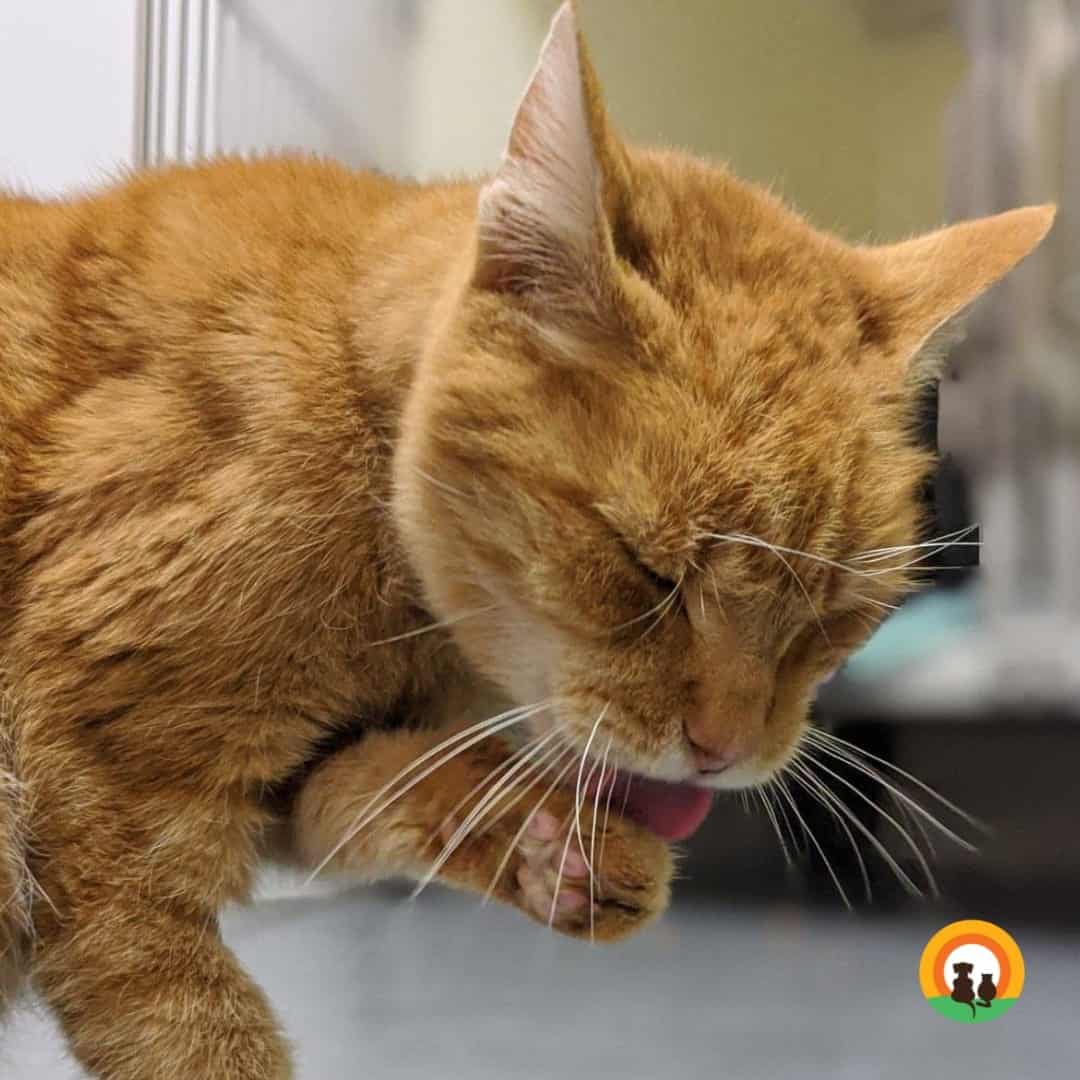
Overgrooming in cats
Cats are experts at grooming, so it can sometimes be difficult to recognise when they are itchy. Excessive grooming or overgrooming can be an important sign.
Hair loss
If your pet is scratching, licking or biting themselves repeatedly, they may start losing their fur.
This is called alopecia, which simply means hair loss or bald patches.
Vomiting or diarrhoea
If skin problems and itching occur alongside vomiting or diarrhoea, food allergies may sometimes be a possible underlying cause.
What should I do if my pet is itchy?
If your pet is itchy, it’s important to have them assessed by your veterinarian.
The first goal of treatment is to break the itch cycle and help your pet become comfortable again.
Your veterinarian will also assess whether there is a secondary infection that needs to be treated.
From there, the longer-term goal is to identify and manage the underlying cause of your pet’s pruritus.
Why does my pet keep getting itchy?
Depending on the underlying cause, there isn’t always a cure for pruritus.
Some skin conditions require ongoing management rather than a one-off treatment. Your veterinarian may recommend a multi-modal approach, which can involve a combination of:
- Dietary management
- Topical treatments
- Medical management
- Ongoing veterinary monitoring
The right combination will depend on why your pet is itchy and what works best for them.
Don’t let your pet suffer through the itch cycle.
If you’ve noticed your pet scratching, licking, chewing, rubbing or overgrooming more than usual, it’s worth talking to your veterinarian.
The sooner we identify what is causing the itch, the sooner we can help your pet feel comfortable again.
Is your pet itchy? Come and talk to your vet today!