Author
Gerry Pearson (CBST, CSAT)
Shelter Trainer at Second Chance Animal Rescue
Posted
October 13, 2026
Want to help your dog feel more confident? Sometimes the answer isn’t more training - it’s giving them more choice. Discover how everyday opportunities for choice and control can help dogs feel safer, build resilience and develop confidence, particularly for dogs experiencing fear, anxiety or stress.
“I just want my dog to be more confident.”
It’s something behaviour professionals hear regularly.
Whether it’s a puppy who is unsure about the world, a rescue dog adjusting to a new home, or a dog struggling with dog anxiety, fear or reactivity, the goal is often the same: we want to help them feel safer, more confident and better able to cope with life’s challenges.
If you’ve ever wondered how to build confidence in dogs or how to make a dog more confident, the answer isn’t always more training or more exposure.
Sometimes, one of the most powerful things we can give a dog is something surprisingly simple: choice and control.
Why Choice and Control Matter for Dog Confidence
Imagine someone blindfolded you, placed you in an unfamiliar room, and started making loud noises.
Now imagine the same room, but this time you could remove the blindfold, walk away from the noise, or open a door whenever you wanted.
The room has not changed.
The noises have not changed.
Your experience of the situation has changed dramatically because you have control.
Dogs are no different.
When dogs feel trapped or unable to influence what is happening around them, their brains can shift into a fear and stress response. Fearful dogs may bark, lunge or try to escape. Nervous dogs may freeze, hide or simply shut down.
These responses are not signs of stubbornness or disobedience and are important parts of dog body language that can tell us a dog is struggling to cope.
The Science Behind It
For many years, scientists believed animals became passive because they learned that nothing they did made a difference. This concept became known as learned helplessness.
Today we understand it is a little more complicated.
Research suggests that fear and helplessness are actually the brain’s default response when an animal experiences something unpleasant that feels completely uncontrollable.
When a dog feels like they have no choice or control, their brain can switch into a fear and stress response. This can make them feel frightened, overwhelmed and more likely to shut down or become passive.
When a dog feels like they have some control, even something as simple as being able to walk away, their brain can better switch off the fear response.
Put simply: dogs cope better when they feel they have a choice.
This is one reason that positive reinforcement dog training, force-free dog training and approaches such as choice-based dog training can be so valuable. Rather than forcing a dog through something they find frightening, these approaches give the dog opportunities to learn, make choices and build confidence at their own pace.
How Choice Can Build Dog Confidence
Every time a dog discovers that their choices matter, they have another opportunity to build ‘dog confidence’.
The brain strengthens the neural pathways involved in learning, problem solving, and emotional regulation. Scientists call this neuroplasticity, the brain’s ability to adapt and reorganise itself in response to experience.
Over time, dogs do not simply remember a particular training exercise.
They develop something much more valuable.
They begin to expect that their actions can influence the world around them.
This is sometimes described as dog autonomy, giving dogs appropriate opportunities to make safe choices about what happens to them and around them.
Instead of giving up when life becomes difficult, they are more likely to investigate, solve problems, and recover more quickly from setbacks.
This is resilience in action.
Why Dog Resilience Matters
Every dog will eventually encounter situations they cannot control.
- A loud storm.
- A veterinary procedure.
- Moving house.
- Unexpected visitors.
- An unfamiliar environment.
We cannot eliminate every challenge our dogs will face.
What we can do is prepare them.
Research suggests that dogs with a history of experiencing choice and control recover more quickly from stressful events. Previous experiences have taught them that challenges can often be managed, making them more adaptable when confronted with new situations.
Dog resilience is not about never feeling stressed or frightened.
It is about recovering more effectively when stress occurs.
If you’re helping a fearful dog, helping an anxious dog or helping a nervous dog, you don’t need to start by asking your dog to do more. Start by asking what choices you can safely give them.
How to Build Confidence in Dogs Through Everyday Choices
One of the most interesting findings from this research is that control appears to generalise across different situations.
Dogs do not need to practise making choices only during stressful events. In fact, providing opportunities for control during positive, everyday experiences may be even more beneficial.
Simple opportunities can make a meaningful difference.
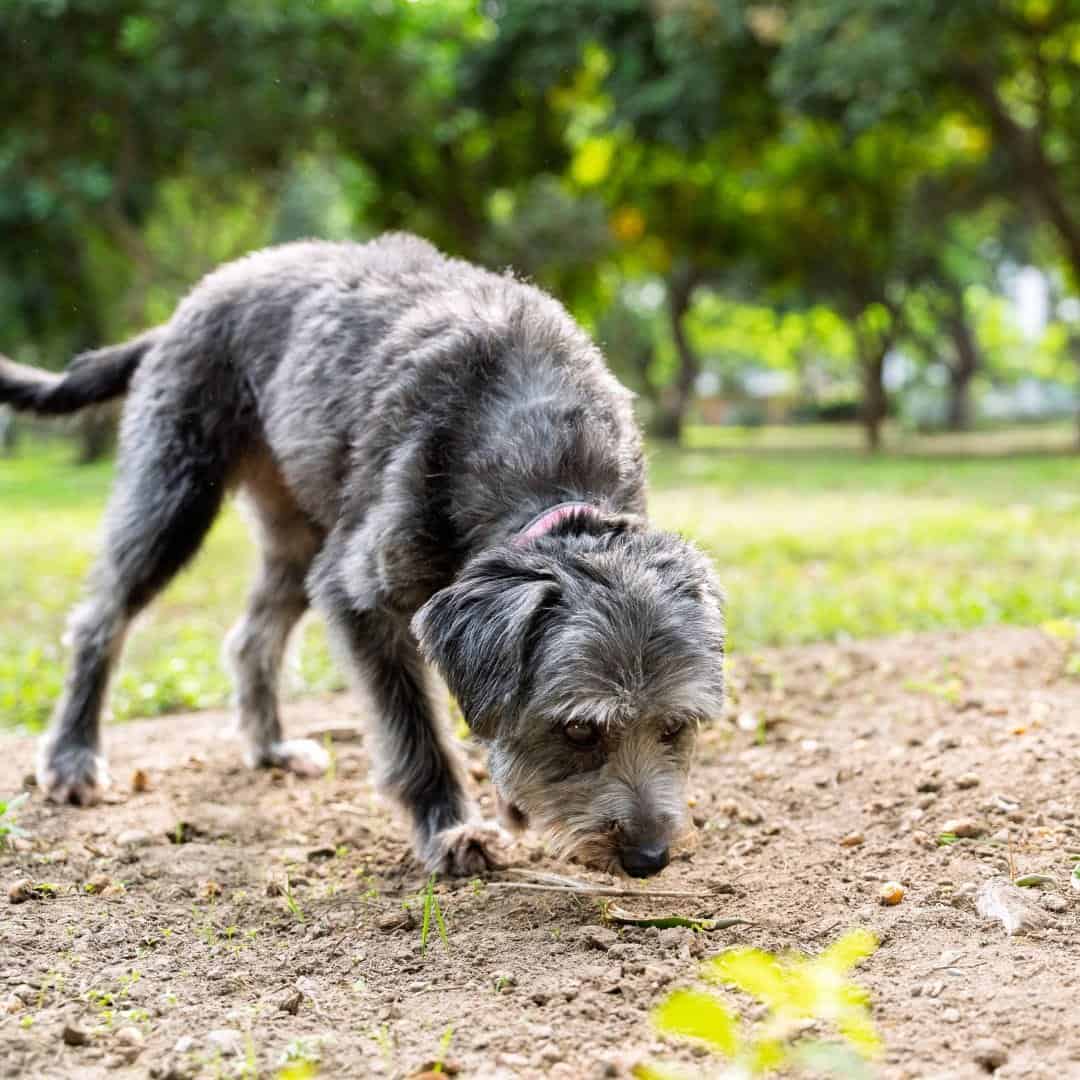
- Allow your dog to choose which direction to sniff on a walk.
- Give them time to investigate new environments at their own pace.
- Offer choices between different dog enrichment activities, such as a sniffing game, food puzzle or favourite toy.
- Introduce cooperative care for dogs, teaching them that they can participate willingly in grooming, handling and veterinary procedures. This can be part of consent-based dog training, where we pay attention to a dog’s body language and provide opportunities for them to communicate when they need a break.
- Respect when they choose to move away from something that makes them uncomfortable.
- Create opportunities to solve simple problems rather than always providing the answer.
The brain does not necessarily remember the specific activity.
Instead, it learns a much broader lesson.
Giving dogs appropriate choices isn’t just about training. It can also support dog emotional wellbeing, particularly for dogs who have experienced fear, stress or environments where they had little control.
My actions matter. Small Choices, Big Impact
Confidence is rarely built through one dramatic breakthrough.
It is built through hundreds of small experiences where a dog discovers that their behaviour has meaning and that they can influence their environment.
Each successful experience becomes another building block for emotional resilience.
Over time, these experiences create dogs who are more adaptable, more optimistic, and better able to cope with life’s inevitable challenges.
Final Thoughts
If you’ve been wondering how to make a dog more confident, remember that confidence isn’t something we can simply teach with a command.
It is about helping them feel capable enough to make good decisions.
Every opportunity we provide for choice and control helps shape how the brain responds to future challenges.
By allowing dogs to make safe, meaningful choices in everyday life, we aren’t simply teaching better dog behaviour.
We’re helping dogs feel safer, more capable and more confident in the world around them.